

Switzerland on a Budget: How We Spent 10 Days Here for Free (Yes, Really)
Switzerland on a Budget sounds like an oxymoron, right? I used to think so too.
For years, Switzerland sat at the very top of my bucket list… and at the very bottom of my “this is realistic” list. Every time I looked up prices, I’d close the tab. $40+ lunches. $300+ hotel nights. $200 mountain tickets. It felt outrageously out of my budget.
But when my husband and I started planning our honeymoon, we decided if we were ever going to make Switzerland happen, this was it. But I refused to let it wreck our finances.
So I got strategic!
I gave us time. I leaned hard into travel points, flexibility, and some creative planning. And after 1.5 years of being intentional, we spent 10 days in Switzerland and paid absolutely nothing out of pocket.
Flights. Trains. Hotels. Activities. Even Food. All covered!
If Switzerland feels financially out of reach for you, I get it. This post is for the planner, the dreamer, the person who wants the alpine views and turquoise lakes without coming home to credit card regret.
I’m going to break down the real costs, the exact strategies we used, and how you can realistically do this too.
No BS, just smart planning.
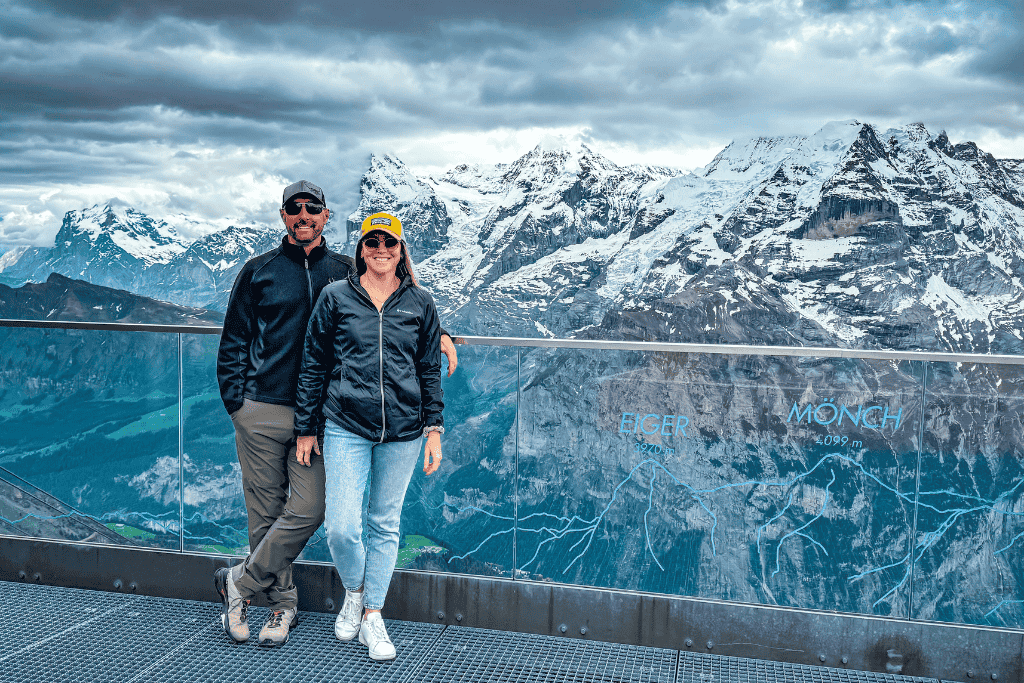

Switzerland on a Budget Quick Guide
Here’s your quick mini guide to planning an epic (and actually affordable) Switzerland adventure:
Best Time to Visit for Lower Prices:
~ Early June (Things just opening up, fewer crowds, better hotel rates)
~ September–October (post-summer, more availability)
Avoid peak ski season and July/August if you’re trying to save.
Cheapest Airports to Fly Into:
~ Zurich (most frequent and competitive fares)
~ Geneva (sometimes cheaper, but not on the main route)
Or do what we did: find the cheapest flight to any major European hub and book a budget hop into Switzerland.
Best Budget Base for Exploring:
~ Wilderswil (between Interlaken & Lauterbrunnen, way cheaper and super charming)
Train Pass Strategy That Saved Us Big:
~ Swiss Half Fare Card
~ Bernese Oberland Pass (stack with Half Fare for even more savings)
Book These Early:
~ Accommodations (8–12 months ahead is ideal)
~ Popular adventure activities (canyon swing, paragliding, etc.)
Is Switzerland Really That Expensive?
Short answer? Yes!!
The first time I seriously looked at the prices, I actually laughed.
And then I closed my laptop.
Switzerland totally has the reputation it does for a reason. A sit-down dinner for one can easily cost what you’d pay for two people in the U.S.
And what I judge everything by is what a coffee costs. A boring coffee is 9 freaking dollars! This hurts even more when it’s terrible coffee.
It’s even more shocking when you leave Switzerland and get your first dinner bill somewhere else. We went to Austria right after, and I remember feeling actual relief when the check came.
I’ll be honest, the cost scared me off for years. My husband and I had Switzerland at the top of our bucket list, but it always felt financially irresponsible. It wasn’t until we got married and started planning the honeymoon that we said, “Okay. Let’s make it happen, but let’s do it smart.”
(And it’s still one of the most romantic destinations I’ve ever visited. I actually rounded up all my favorite spots in this guide to the most romantic places in Switzerland).
The truth is, Switzerland is expensive if you don’t plan strategically. But I now have proof that a bucket-list trip here is absolutely not out of reach.
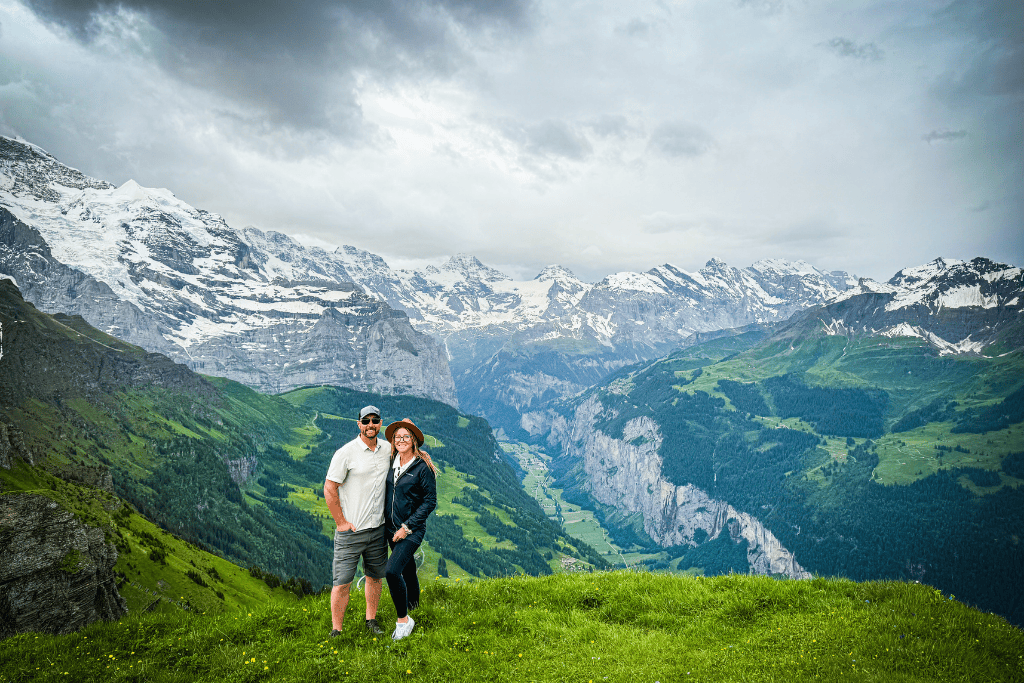
We spent 10 days exploring multiple regions, hiking jaw-dropping alpine trails, wandering storybook villages, standing in front of turquoise lakes that didn’t even look real… and we didn’t pay for any of it.
How?
I’ll show you so you can do it too!
The True Cost of Switzerland
Before I show you exactly how we made this trip free, let’s talk real numbers.
These are the average prices I found while planning our trip. And yes… they’re high.
But don’t panic. In the next section, I’m breaking down every strategy I used to get each of these expenses for way less to stretch our budget.
Flights
Flights to Switzerland aren’t cheap, especially when you live where we live in Montana, which has pretty terrible flights in and out.
In my research, round-trip tickets to Switzerland typically ranged from $900 to $1000 per person. That’s even being flexible with dates. Peak summer was way higher. But keep reading because I’ll show you exactly how I finagled super cheap tickets!
Accommodations
Looking up Hotels in Switzerland is where things really start to feel expensive fast.
I’m a mid-range kinda traveler, but I’ll be honest, I did look into hostels because I was feeling sick at the hotel prices. But at my age and for our honeymoon, I just couldn’t bring myself to stay in a hostel.
So I pretty much only stuck to mid-range 3–4 star hotels. Still, they ranged between $300 to $500 per night, depending on the town. And that’s not luxury. That’s just decent, comfortable stays.
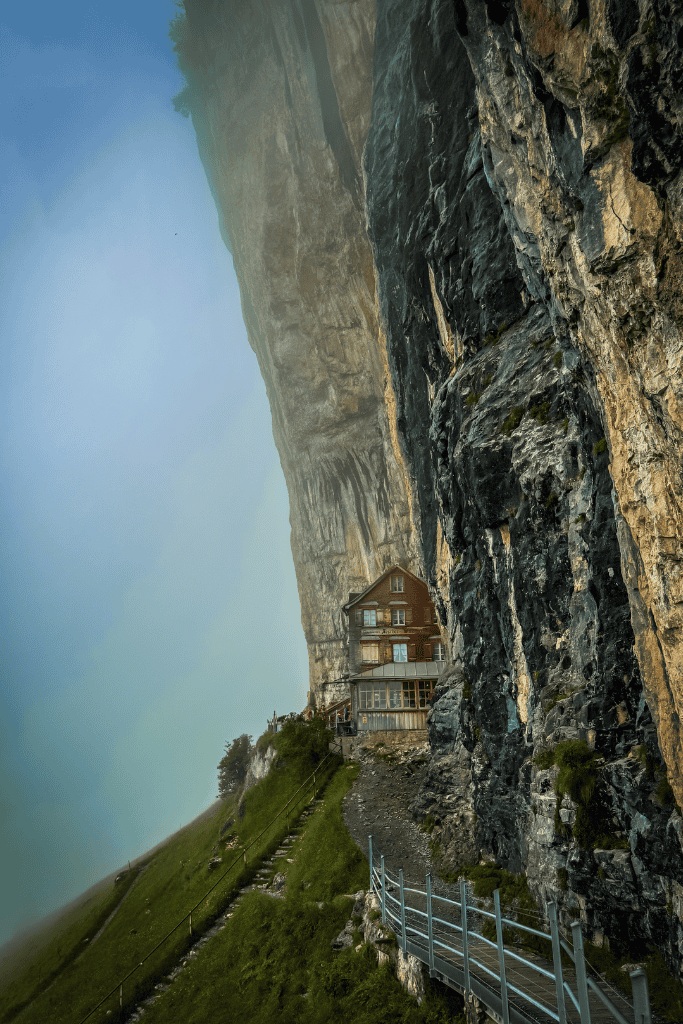
The mountain hut we stayed at one night was our cheapest stay at $190.
Transportation / Train Passes
Switzerland’s public transportation system is unreal.
But that impeccable transportation comes at a cost!
When I first started researching transportation and passes, I felt like I needed a spreadsheet to keep it all straight. There’s the Swiss Travel Pass, the Half Fare Card, regional passes, and then people start throwing out the Eurail Pass, too.
It all felt super complicated, and I didn’t want to buy the wrong pass and waste money. The prices vary widely depending on how many days you plan to be in Switzerland and how much you plan to move around.
So you really do have to run the math for your specific itinerary. It’s not a one-size-fits-all.
As for a rental car, I considered it. And then I looked at everything that comes with that.
At first glance, the daily cost doesn’t seem that steep. I found you can rent one for $60 to $80 a day. But then, when you look into paying for parking, it’s expensive! Plus, in a lot of the mountain villages, you can’t even drive in. So you’re paying for a car that just sits there.
For us, trains just made more sense. But only because we picked the right pass for our route.
Groceries
Even groceries are pricey. We were honestly a little sticker shocked, especially in the smaller mountain villages.
A basic picnic for two with simple bread, cheese, meat, fruit, snacks, and drinks easily ran us around $50. It’s manageable, but you definitely feel it compared to grocery prices back home.
Meals Out
Eating out is where your budget can disappear fast!
Expect to spend $35–$60 per person for a casual (nothing fancy) sit-down meal. And to be completely honest, the food in Switzerland is pretty unimpressive.
We made a rule to only eat out once per day, usually dinner, and kept the rest to eating from grocery stores.
Drinks
This is one of those sneaky budget leaks people don’t think about. You grab a coffee in the morning, a water mid-day, a beer at dinner… and suddenly you’ve spent $25 without even trying.
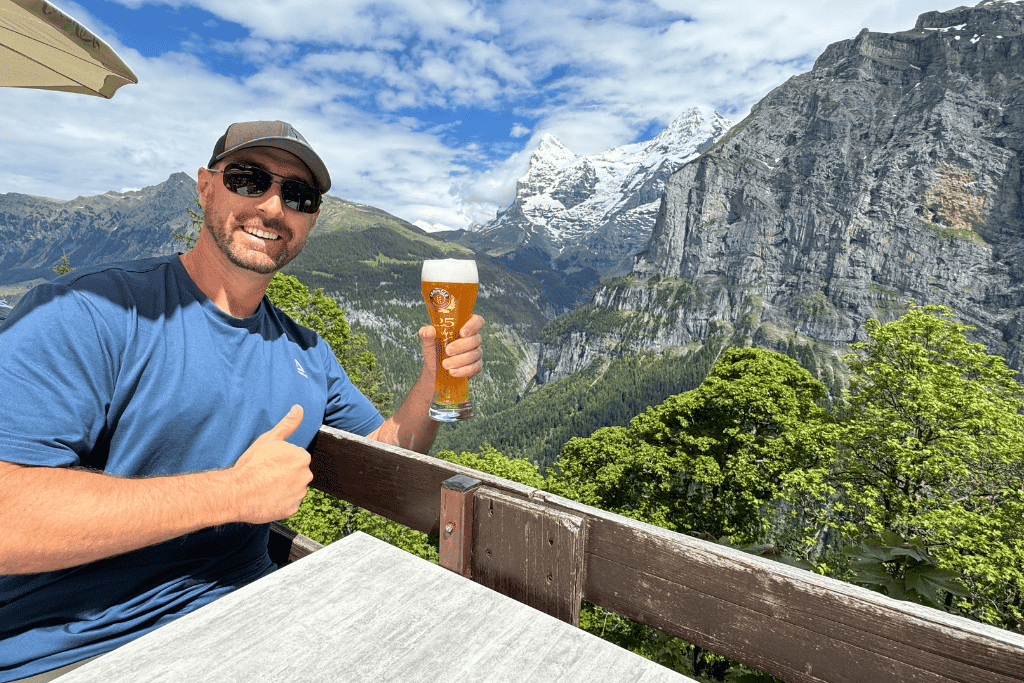
Coffee averages around $9, a bottle of water about $5, and a plain beer in a restaurant costs around $10.
And over a 10 day trip like ours… that absolutely adds up.
Activities
Switzerland is also one of the adventure capitals of the world. And those adrenaline-filled adventures are not cheap.
Paragliding, canyoning, bungee jumping, reaching epic peaks… you’re looking at anywhere from $200 to $390 per person. These adventures are epic… but definitely ask yourself, “Is this something I must do, or I’ll regret it?” before you just start booking things.
Switzerland has so many completely free, jaw-dropping outdoor experiences. I’m talking hikes that look fake. Lakes that are the brightest turquoise you’ve ever seen. Mountain views that cost exactly zero dollars. I’ll share all my favorites later in this post.
But if you want to splurge on one big adventure, do it. Just don’t feel like you need to do all of them to have an incredible trip.
And now that you’ve seen the numbers, let’s talk about how we avoided paying them.
How I Planned a 10 Day Trip to Switzerland for Free
This is the exact strategy that made our 10-day Switzerland trip completely free. No secret loopholes. No sketchy hacks. Just intentional planning, smart timing, and leveraging tools that anyone can use.
If you’re willing to give yourself enough time and be strategic about it, you can absolutely repeat this.
When to Start Planning a Trip to Switzerland
If your goal is to make Switzerland more affordable, the earlier you start, the better.
We started planning about 1.5 years in advance.
That might sound excessive, but I had a very specific goal: I wanted to pay zero dollars for this trip! And in order to do that, I knew we needed time to accrue enough travel points to cover the bulk of our expenses.
And time to get the best deals before everyone else does!
For a bucket list trip like Switzerland, I’d say at least one year minimum if you want to do this right. (If you’re aiming to cover everything with points like we did, even earlier is better.)
The biggest advantage of starting early is flexibility. You can watch flights, lock in better hotel rates, earn points, and never feel FOMO and end up overpaying.
Get a Travel Credit Card and Earn the Sign-On Bonus
I have to include this because I am such a huge fan of travel credit card points, and honestly, it still amazes me how many people don’t take advantage of them.
My husband and I both applied for a travel credit card with a 60,000-point sign-on bonus. Between the two of us, that was 120,000 points almost instantly, which ended up covering both of our plane tickets and our train passes.
💡 If you are wondering how much those 120,000 points covered in travel expenses, it was about $2000.
Now, a very important note: only do this if you are responsible for credit cards. If you carry credit card debt or tend to overspend, this is not the strategy for you. Never spend more just to hit a bonus.
We timed our applications right before a large purchase we were already planning to make, so we hit the minimum spend naturally without changing our spending habits.
Earn Points on All Your Daily Spending
Once you’ve earned that sign-on bonus, the next step is simple: put all of your normal, everyday spending on that card.
Groceries. Gas. Bills. Subscriptions. Everything you’re already paying for anyway, just funnel it through the card and pay it off each month.
That’s exactly what we did for a year and a half. No extra spending. No lifestyle changes. Just intentional point stacking.
Between our sign-on bonuses and consistent daily spending, we earned enough points to cover our flights, train passes, half of our accommodations, and even reimburse ourselves for activities and other travel expenses.
It sounds wild, but it’s totally doable if you give yourself enough time and stay disciplined. It would be even more if you are a larger family. It was just my husband and me, so if we can do it, then anyone can. And we are not big spenders!
Ask for Gift Cards on Special Occasions
If you come from a big gift-giving family like I do, this one is huge.
We let people know what we were saving for. When birthdays, holidays, and anniversaries rolled around, we asked for gift cards instead of random presents.
Of course cash works too, but let’s be honest, cash is way too easy to spend before your trip.
We specifically asked for Hotels.com gift cards because that’s typically where I book our accommodations, and I’ve built up loyalty perks over the years.
Between those gift cards, loyalty discounts, and reward credits, we were able to cover the other half of our hotel stays.
And honestly, it made gift-giving easier for everyone. Total win-win.
Bonus: Have you heard of the Fetch app? It’s a free app where you scan your grocery and shopping receipts and earn points for stuff you’re already buying. Then you can trade those points in for gift cards.
We redeemed ours for Hotels.com gift cards and also used them toward our stays.
It adds up… and I’m always here for “basically free” travel. 😉 If you want to, too, download the Fetch app and use code NMC5F to get a bonus when you submit your first receipt.
Timing and Flexibility is Most Important
If I had to pick the most important factors in saving money in Switzerland, it would be timing and flexibility.
Switzerland is a year-round destination, but certain seasons are dramatically more expensive.
Ski season and peak summer (July and August) are the priciest times to visit. If you’re trying to save, aim for shoulder season (April and May, or September and October). It won’t be “cheap,” but it will be noticeably better.
The second piece is flexibility, especially important when it comes to flights.
I stalked airfare prices. I watched them for months. And when they dropped, I booked. We ended up scoring awesome tickets for early June. It wasn’t peak summer, but the weather was beautiful, and the trails were mostly open.
Important Note: mountain regions can have limited access in April and early May. This is when they do their maintenance. Some lifts don’t run, and many hiking trails don’t fully open until mid-June. So make sure the experiences you’re dreaming about will actually be available when you arrive.
Getting Flights to Switzerland for Free
Okay, now let’s talk about how we actually flew to Switzerland for free.
One of my favorite Europe travel hacks is this: just get to Europe the cheapest way possible.
Don’t get overly fixated on flying directly into Switzerland. For us, we found one-way tickets to London for $150 per person. Once you’re across the Atlantic, flights within Europe are almost always way cheaper.
From London, we booked a short flight to Zurich for under $100 per person.
Then, for our return home, we found one-way tickets from Zurich for around $300 per person. So altogether, we spent about $550 per person to get to and from Switzerland.
The best part is we paid for those flights with our travel credit card and then used our points to erase the travel charges. So technically, they were Free.
💡 This is a strategy I use 99% of the time when flying to Europe. It takes a little more planning on my end, but it consistently saves us hundreds (sometimes thousands) of dollars.
Pick Fewer Destinations
If you really want to keep Switzerland affordable, slow down.
Ping-ponging around the country every single day is a fast way to chew through your budget. More train tickets. More hotel changes. More impulse spending. Instead, choose a central home base and take day trips from there.
We chose just three main destinations for our 10-day trip. That also saved us from having to constantly pack and unpack, which gets old really fast.
If you look closely at train times between the places on your wish list, I guarantee you can find a town that makes a perfect hub, and it’ll almost always be more affordable than hopping around nonstop.
Choose to Stay in Less Expensive Towns
I completely understand how tempting it is to book a hotel right in the heart of famous places like Lauterbrunnen, Grindelwald, or Zurich. They’re iconic for a reason.
But if you zoom out just a little bit on the map, you can usually find a nearby town with significantly lower accommodation prices.
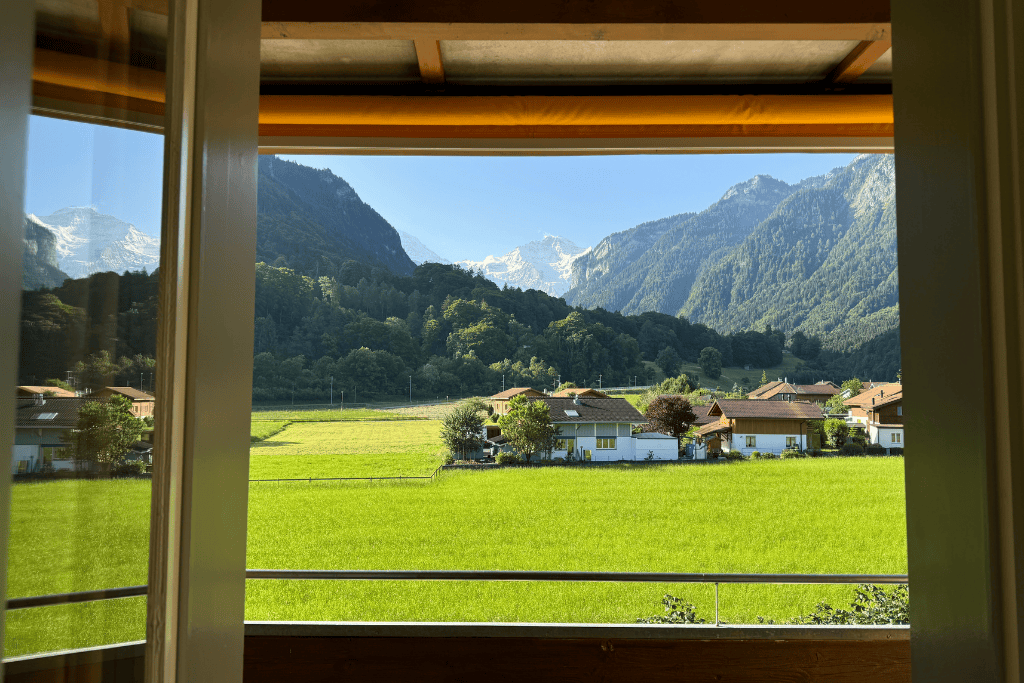
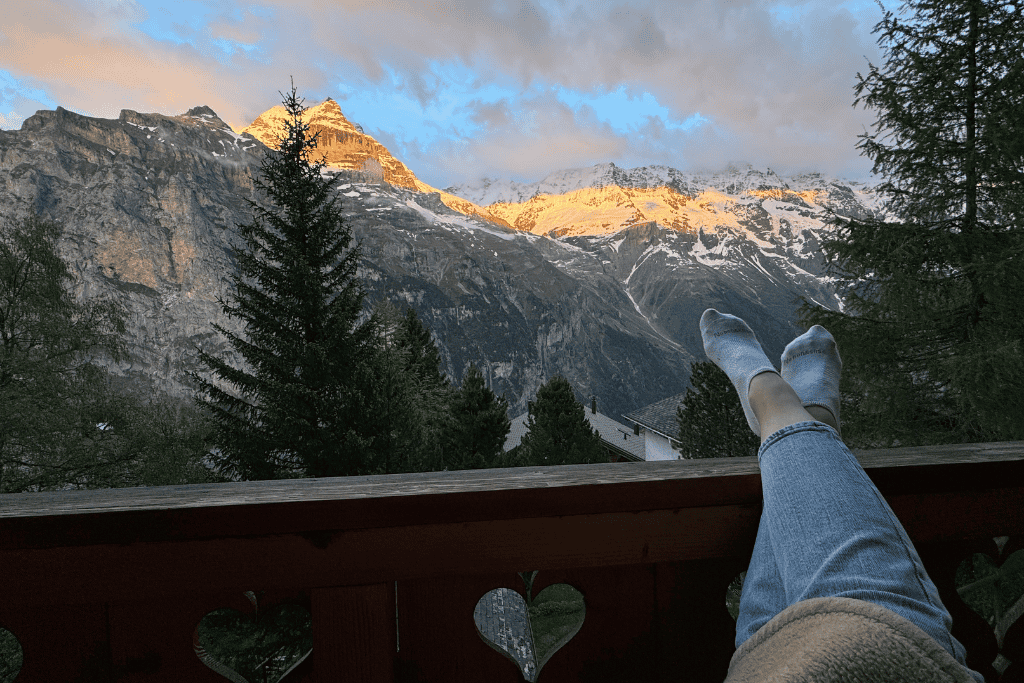
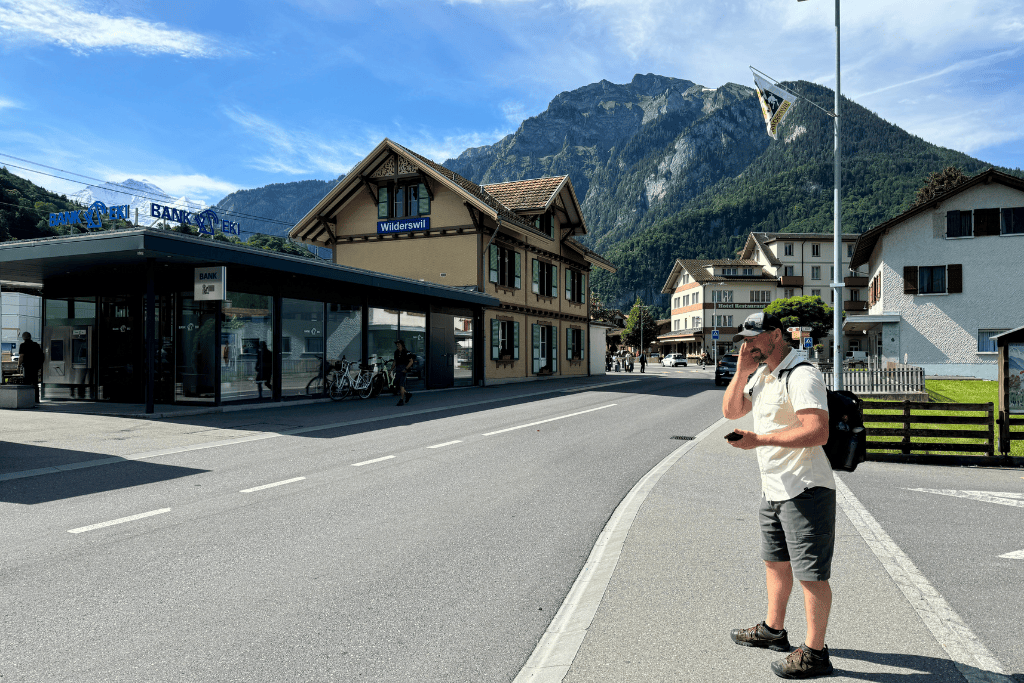
When we were exploring the Jungfrau region, we stayed in Wilderswil. A tiny town between Interlaken and Lauterbrunnen.
It sat right on the train line, so getting everywhere was super easy, and the hotel prices were noticeably cheaper.
And honestly, we loved that little town. It was quieter, more relaxed, and felt way less touristy. Exactly the vibe we were looking for.
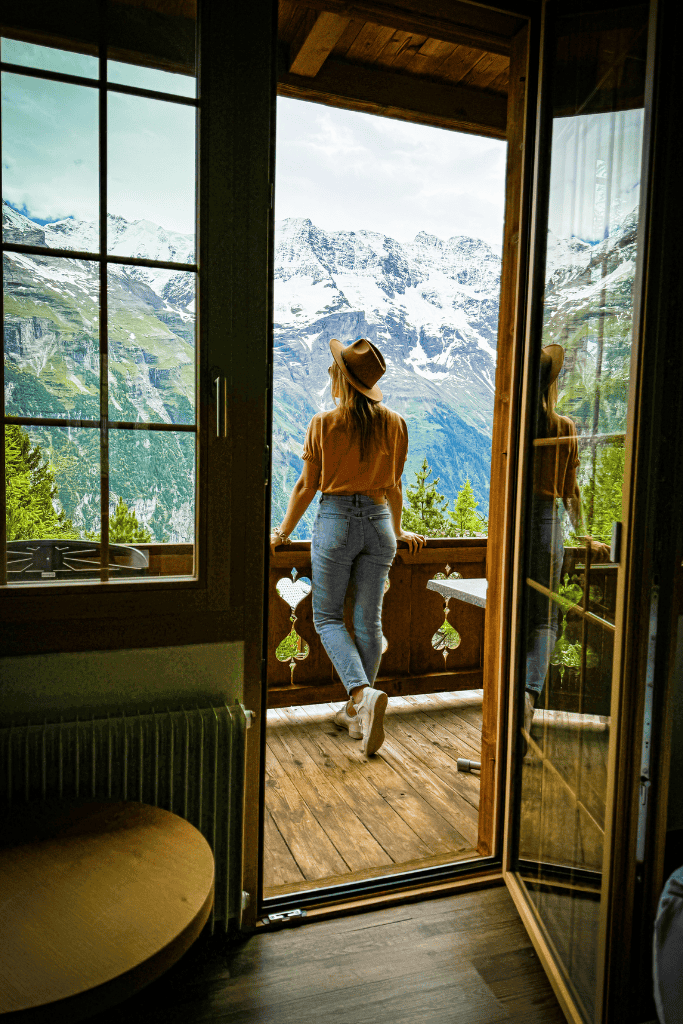
>> Click here and consider where we stayed. We had great views from our balcony!
How to Get Accommodations in Switzerland for Less
Besides choosing lesser-known towns, there are a few other ways to seriously cut down your hotel costs in Switzerland.
First, book early!
I’m talking 8 to 12 months in advance if you can, especially if you have your heart set on popular mountain towns where rooms sell out fast.
I booked most of our accommodations around the 6-month mark, and had a hard time finding places I liked at a price I was willing to pay. If I had booked earlier, I absolutely would’ve had better options and less stress.
Second, leverage loyalty programs.
I’ve built up loyalty status with Hotels.com over the years, which unlocked special discounts and perks that I fully took advantage of. On some stays, I saved up to 30% off just by having status. That adds up quickly in a country like Switzerland.
Third, use gift cards.
On top of that, we used gift cards (that we asked for during holidays and birthdays) and even used the Fetch app, which lets you scan everyday receipts to earn points that you can cash in for gift cards. I redeemed mine for Hotels.com gift cards and stacked those savings on top of the loyalty discounts.
It may sound small, but stacking multiple strategies is how this trip became free.
Pro Tip: When you book a place to stay, try to choose one with free cancellation, especially if you’re booking far ahead. Plans can change, and sometimes prices drop. If they do, you can cancel and rebook at the cheaper rate.
And if you can, pick the “pay later” option so you have more time to earn points and cover the cost.
How to Get Around Switzerland on a Budget
Transportation is where Switzerland can either wreck your budget… or feel like a total win.
You have these options to choose from:
~ The Swiss Travel Pass
~ The Eurail Pass
– The Half Fare Card
– Regional passes (like the Bernese Oberland Pass)
– Or renting a car
Too many to choose from, in my opinion, and it gets really confusing. So I made you a free Switzerland Train Pass Cheat Sheet to help you decide what’s best for your trip.
The Swiss Travel Pass gives you unlimited travel for a set number of days, but it’s expensive upfront.
The Eurail Pass only really makes sense if Switzerland is just one stop on a larger European trip. Otherwise, I don’t recommend it.
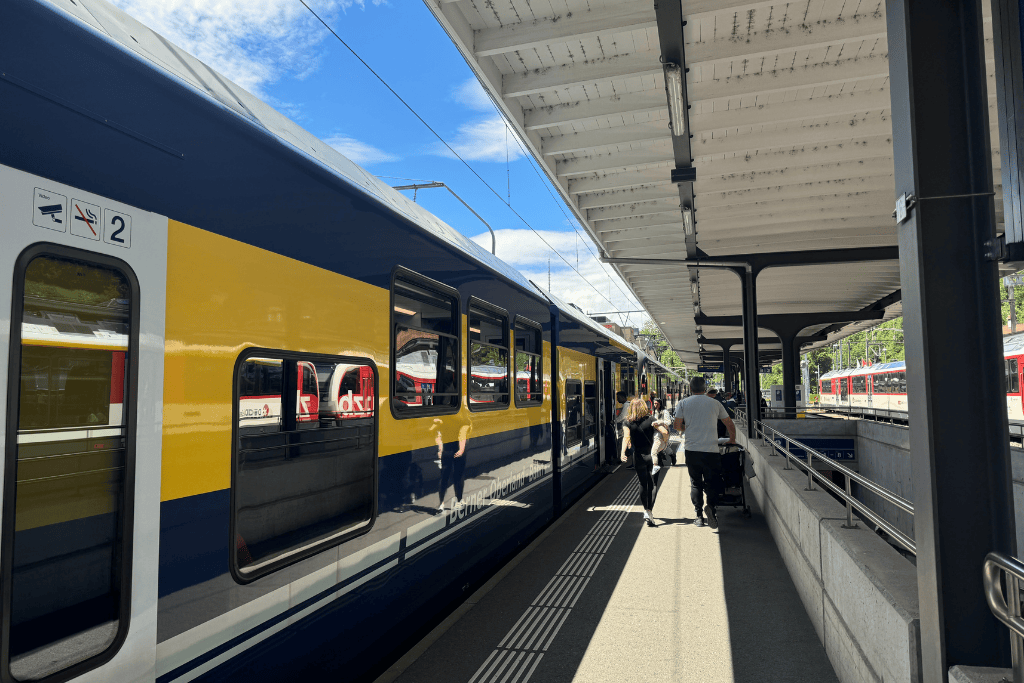
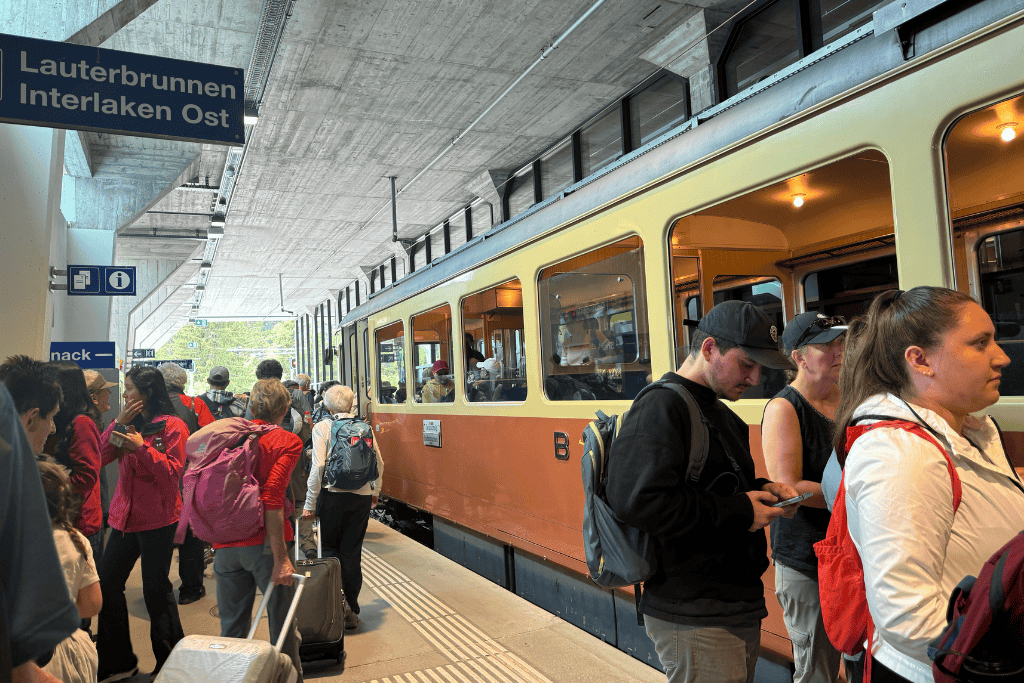
For our itinerary, the smartest move was to buy the Swiss Half Fare Card first. That card gives you 50% off most trains, buses, boats, and mountain transport.
Then, since we were spending five full days in the Jungfrau region, we purchased the Bernese Oberland Pass. And because we already had the Half Fare Card, we got that pass at half price too.
It ended up being the perfect combo for our route.
As for renting a car… I honestly don’t think it makes sense in most cases.
Car rentals in Switzerland are expensive, parking is expensive, and in regions like Jungfrau, you can’t even drive to many of the mountain villages.
We wanted to spend a lot of our time in the little car-free alpine towns, so public transportation was not only easier, it was more practical.
💡 But the best part… once we purchased all our passes, we used our credit card points to pay off the charges. So we traveled across some of the most scenic train routes in the world… for free. Woot Woot!
How to Eat in Switzerland Without Going Broke
Okay, I’m just going to say it… Switzerland is not a foodie destination.
And coming from someone who plans entire trips around food… That’s saying something.
I found most of the meals to be fine, but not worth blowing your travel budget on. So if you’re trying to make Switzerland more affordable, this is where you can really save big without feeling like you’re missing out.
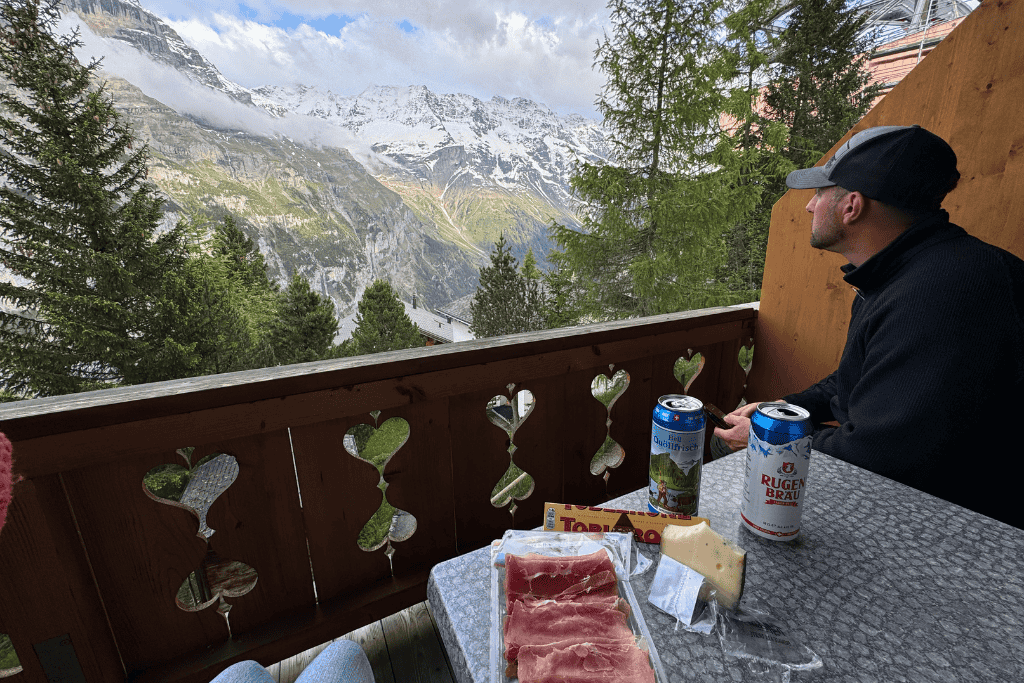
We relied heavily on grocery stores. We found Coop and Aldi to be the most affordable options, and Coop especially had great pre-made salads, sandwiches, and even hot items that were perfect for easy meals.
We’d stock up on breakfast items, snacks, drinks, and lunch supplies and keep our room loaded.
Almost every day, we packed a lunch in our daypack and found the most epic picnic spot we could. Honestly, those picnic lunches were some of my favorite meals of the trip.
We usually ate out only once a day, typically dinner, and we’d choose more affordable menu items or share a dish.
If your accommodation has a kitchen, you can save even more by cooking dinner in. Ours didn’t, but if I were doing it again, I’d absolutely consider that.
Also, look for hotels that include breakfast in the room rate. It’s getting harder to find in Europe, but they’re still out there. If not, skip paying for hotel breakfast separately. It’s almost always overpriced for what you get.
How to Get Amazing Experiences in Switzerland for Less
Experiences in Switzerland range from totally free… to “did I just drop my entire travel budget in one afternoon?”
Yes, Switzerland is one of the adventure capitals of the world, with adrenaline activities like Paragliding, canyoning, and bungee jumping. But you do not need to drop a fortune to have bucket-list moments here.
About 99% of our adventures were free or very affordable, and we had the most incredible time. Don’t worry, I’ve listed all the free things we did in another section in this post.
Pro Tip: My advice is to make a list of everything you’d love to do. Then decide what you absolutely cannot miss. Pick one or two experiences to splurge on and let the rest be the many, many free outdoor adventures Switzerland offers.
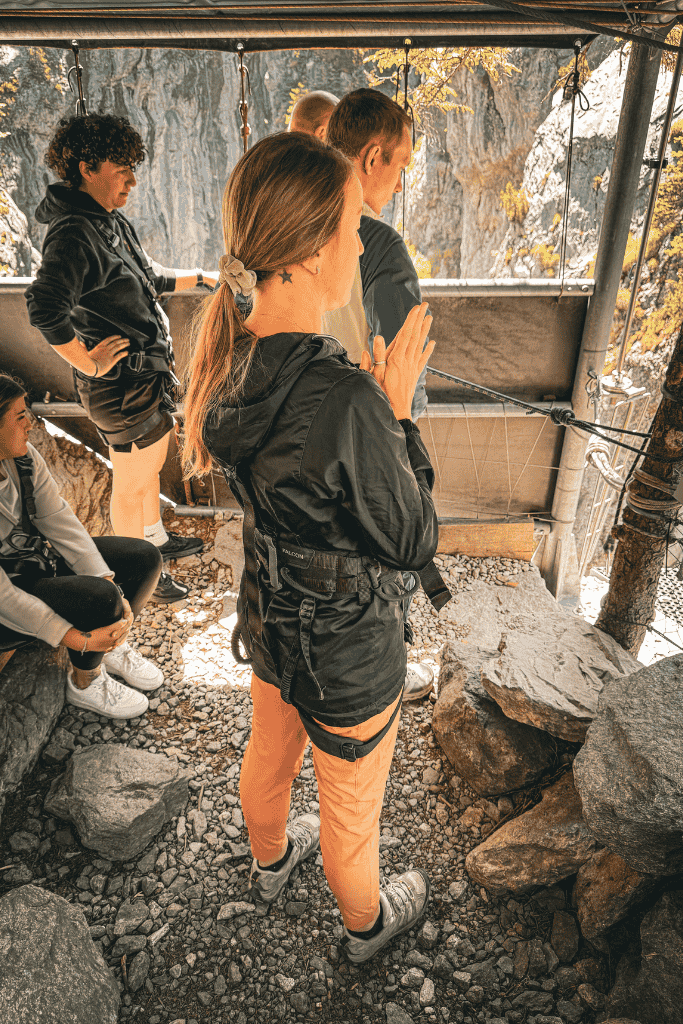
For us, we chose to splurge on the canyon swing in Grindelwald. It was such an adrenaline rush and completely worth it.
We probably would’ve splurged on paragliding too, but we had already done that in Turkey, so we skipped it here. But could you imagine paragliding over the Lauterbrunnen valley? It would be incredible!
You’ll also come across tickets to go to the “Top of Europe” and other high mountain viewpoints that cost an outrageous amount. I personally skipped them. I have a friend who spent a small fortune taking his family up there and ended up regretting it because the views weren’t good because of the weather.
When you’re spending that much, that’s a risky gamble. Really think carefully before splurging on it.
And just like our flights and train passes, we paid for our activities on our travel credit card and used points to wipe out the charges.
What Our 10 Days in Switzerland Actually Would Have Cost
I think it’s really important to show you the real numbers to help you budget.
Below is what our 10-day mid-range Switzerland trip for two people would have cost if we paid fully out of pocket. The chart below reflects 3–4 star hotels, train passes, one paid adventure activity, groceries + one meal out per day, and standard airfare pricing.
Our Realistic Mid-Range Cost Breakdown (For Two People)
| Category | Retail Cost (2 People) | What We Paid |
|---|---|---|
| Flights | $1,100 | $0 |
| Train Passes & Transport | $1,200 | $0 |
| Accommodations (9 nights) | $4,500 | $0 |
| Food (Groceries + 1 Meal Out Daily) | $1,500 | $0 |
| Activities & Experiences | $1,200 | $0 |
| Total | $10,500 | $0 |
Yes. A mid-range, 10-day Switzerland trip for two people will cost around $10,500.
This was not a backpacker trip. We stayed in comfortable 3–4 star hotels. We did bucket-list experiences. We traveled across multiple regions. This was a dream trip!
And because we planned 1.5 years ahead, stacked points, leveraged sign-up bonuses, and layered in gift cards and loyalty perks… we wiped that entire $10,500 cost off our card.
How many points would you need to earn to cover that much, you might be asking.
(Aside from the gift cards, we used to pay for hotels.)
We earned 610,000 points in 1.5 years by being very diligent about maximizing the point categories on each card. And I referred my husband, so I got an extra bonus for referring him.
That’s the power of intentional planning.
And I think seeing the full number makes one thing very clear…
Switzerland is expensive, but it’s not out of reach.
Common Switzerland Budget Mistakes (Please Don’t Do These)
Okay, if I were sitting across from you helping you plan this trip, these are the things I would literally grab your arm and say “don’t do that.”
Booking Straight Through Flights Just Because It’s Easier
I know. Booking one straight-through ticket is super simple.
But simple usually costs more.
If you can just get yourself to Europe cheaply (London, Paris, Amsterdam, wherever), flights within Europe are almost always way cheaper. That one extra step of planning can save you hundreds per person.
It takes a little more effort. But it’s worth it.
Staying Right in the Most Famous Towns
I totally get the temptation to book a hotel right in Lauterbrunnen or Grindelwald. They’re absolutely stunning.
But they also know they’re stunning.
Which means you’re paying a premium just to sleep there.
When we stayed in Wilderswil (literally 15 minutes away by train), we saved so much money and still spent all our days in the same places. And honestly, the little town was quieter and more relaxing at night.
Buying a Train Pass Without Doing the Math
Please, please don’t just buy the Swiss Travel Pass because everyone online says to.
Switzerland’s transportation is amazing, but it’s not one-size-fits-all.
Sometimes the Half Fare Card makes more sense. Sometimes a regional pass is better. Sometimes point-to-point tickets make more sense.
Run your actual itinerary numbers first. Otherwise, you might be paying for unlimited travel you don’t even use.
💡 To help you figure it out, I’ve made an easy Swiss Train Pass Cheat Sheet that you can use for free.
Dropping a Fortune on “Top of Europe” Without Thinking It Through
Okay… this might be controversial.
But tickets up to Jungfraujoch are ridiculously expensive. And in my opinion I don’t think its worth that much.
Besides, you can drop a fortune, and the weather completely ruins it. Like my friend who paid for his whole family to go up, and when they got up there, they couldn’t see anything. But he had already reserved the tickets and couldn’t get his money back.
I’m not saying don’t go. I’m saying make sure it’s something you really care to see, not just something Instagram told you to do.
There are so many jaw-dropping views in Switzerland that are completely free.
Eating Every Meal at Restaurants
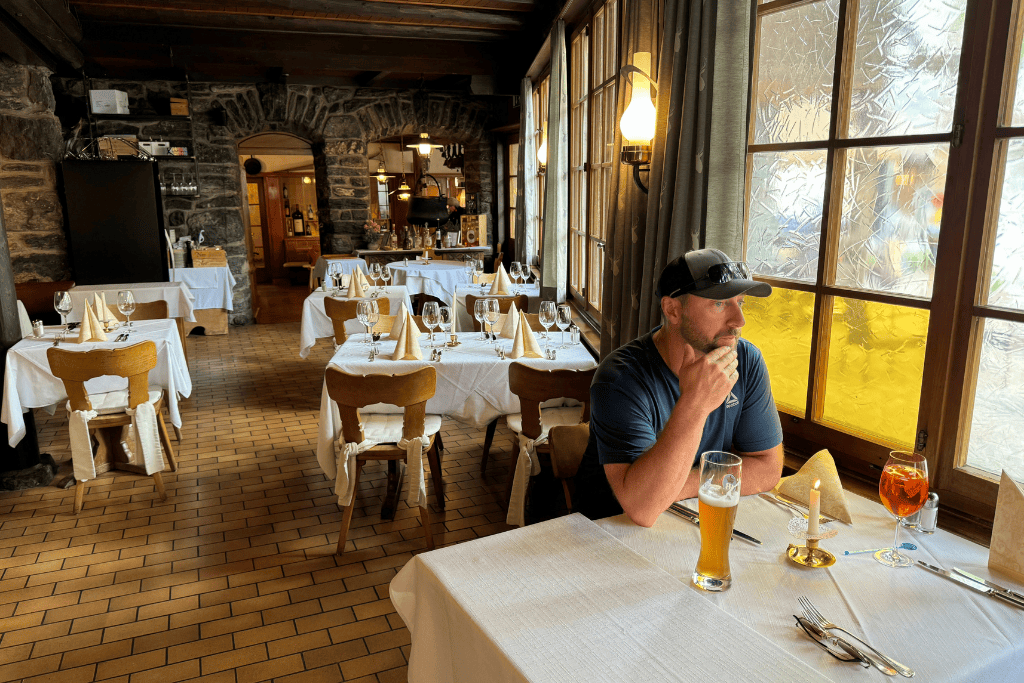
If you eat out three times a day in Switzerland, your budget will disappear faster than you can blink.
Grocery stores are your best friend in Switzerland.
Some of my favorite memories were picnics with insane mountain views. Bread, cheese, fruit, a little drink… sitting in a meadow with cowbells echoing around us.
Way better than a $80 lunch, in my opinion.
Exchanging Money at the Airport (I Learned This the Hard Way)
Do not. I repeat. Do not exchange money at the airport.
I made that mistake once, and I will never do it again. The rates are awful. The fees are worse.
Those flashy neon exchange booths draw you in like a moth to a flame, but don’t do it!
Wait until you get into town and use a real bank ATM. Preferably one that is attached to the bank, not a standalone ATM!
Planning This Trip Last Minute
Switzerland is one of those places where you need to plan way in advance.
The earlier you book, the better hotel options you’ll have. The more time you give yourself, the more points you can earn. And the more flexible you can be with flights.
Trying to wing Switzerland is what makes it feel painfully expensive.
Free and Cheap Things to Do in Switzerland
Now for the fun part.
These are hands-down my favorite free and cheap things we did in Switzerland. And honestly, many of these ended up being the most memorable moments of our entire trip.
Proof that you absolutely do not need to spend a fortune to have an incredible trip.
Wander Historic Old Towns
Switzerland’s old towns are straight out of a storybook and completely free to explore.
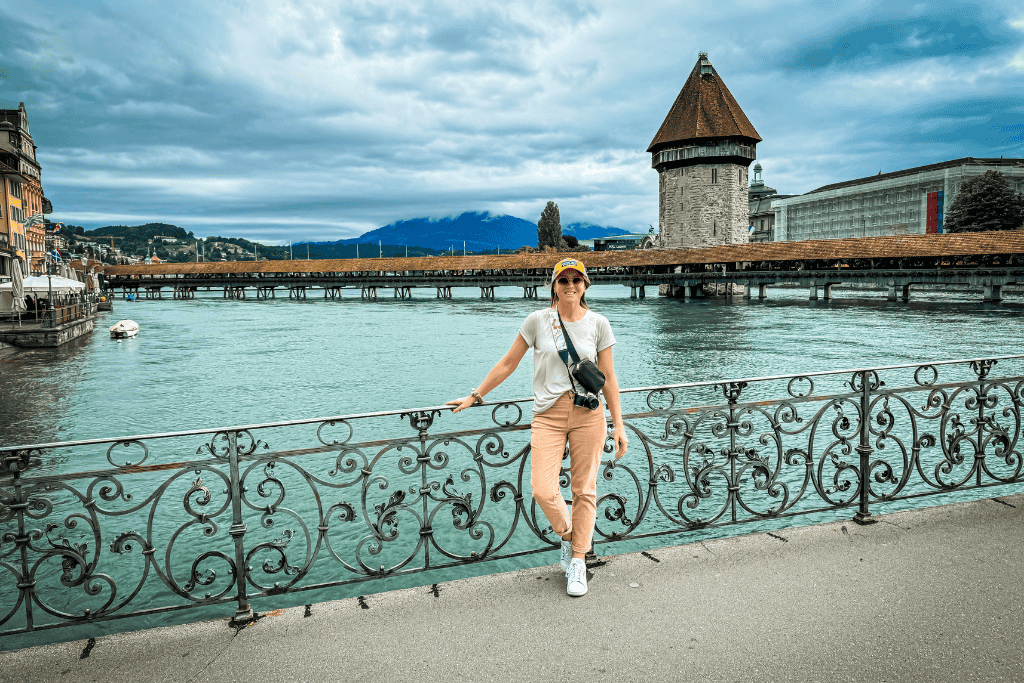
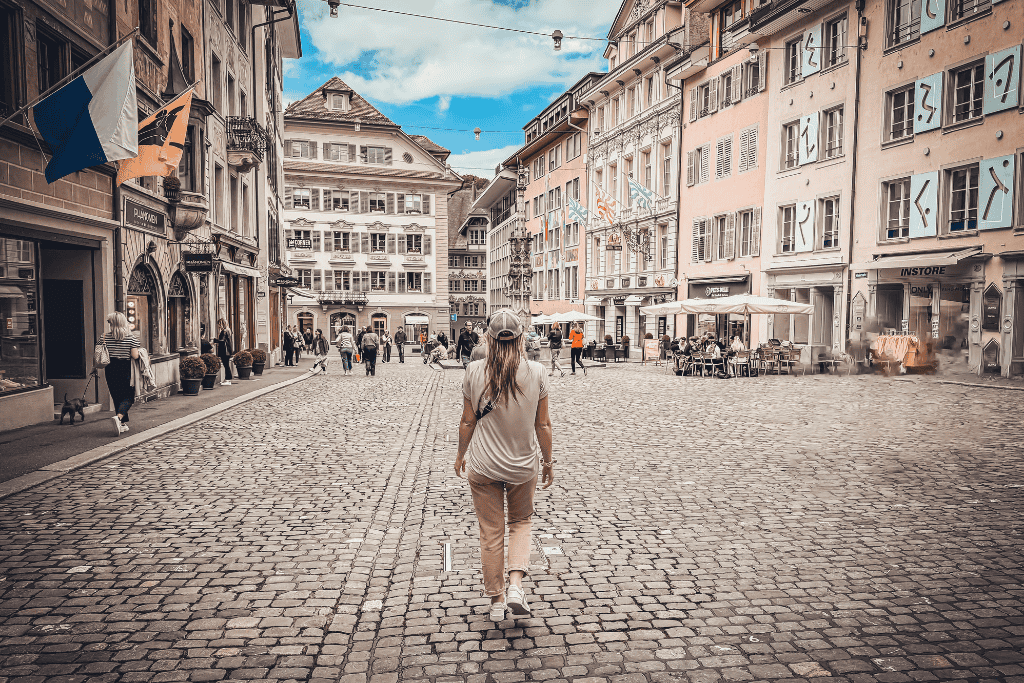
My favorite old town was in Lucerne. You can wander cobblestone streets, admire colorful frescoed buildings, and cross the iconic Chapel Bridge, one of the most beautiful covered wooden bridges in Europe.
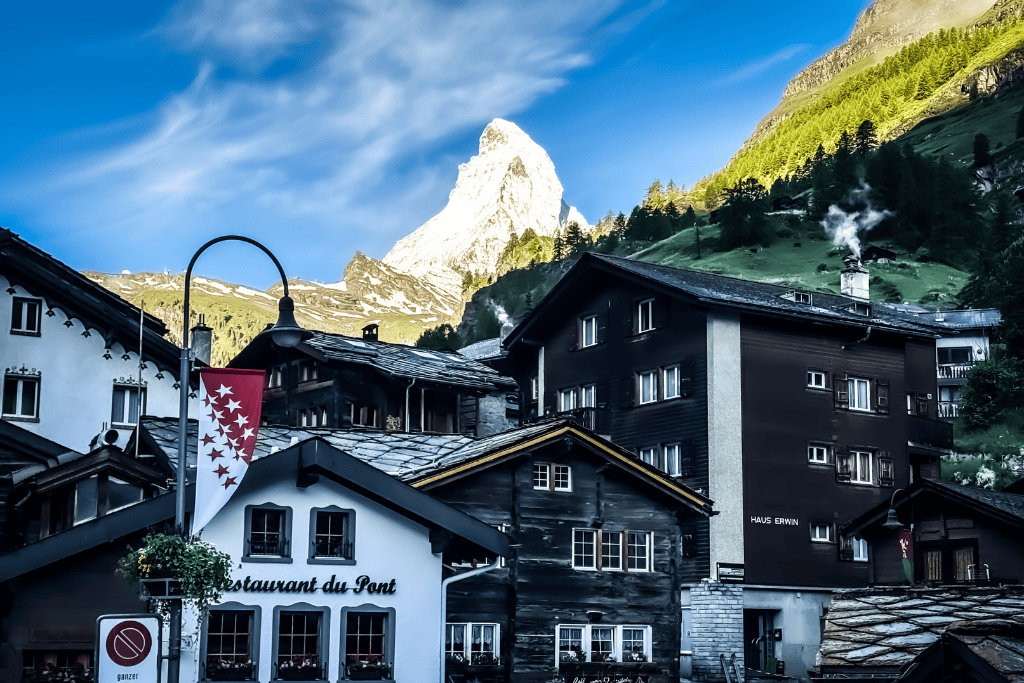
Zermatt is another favorite. The old quarter has centuries-old wooden chalets that feel frozen in time. No ticket required.
Ride the Free Funicular up to Hotel Château Gütsch in Lucerne
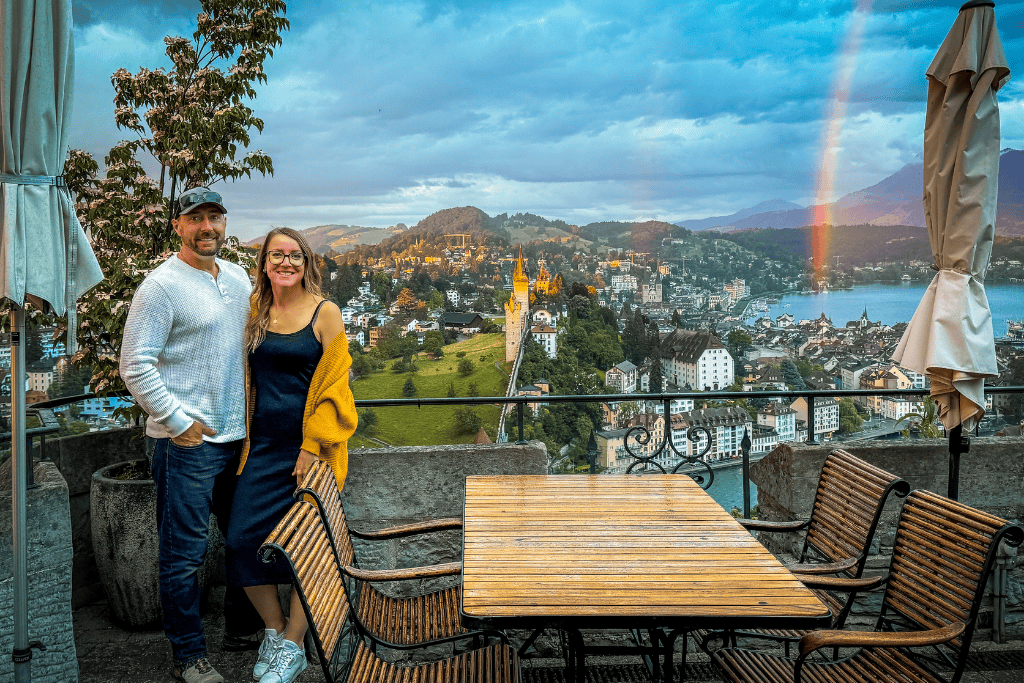
The funicular up to Hotel Château Gütsch is completely free to ride, and the views from the terrace are unreal.
Go around sunset and thank me later.
The restaurant itself isn’t cheap, but you don’t have to eat there. Just grab a drink, soak in panoramic views of Lucerne and the lake, and enjoy one of the best free viewpoints in the city.
Walk or Ride Bikes Through Lauterbrunnen Valley
We originally planned to rent bikes in Lauterbrunnen, but they were completely sold out. So we walked the valley instead, and honestly, I’m so glad we did.
Green meadows. Sheer cliffs towering on both sides. Waterfalls everywhere you look. Cows with their giant clanging bells echoing through the valley. It felt unreal.
Completely free. Completely unforgettable.
Eat from Farm Fridges
This was one of the coolest little surprises of the trip.
All over Switzerland, especially in the Jungfrau region, you’ll find self-service farm fridges and honesty shops stocked with local goods. We found some of the best ones in Mürren and Wengen.
Fresh cheese, local meats, and homemade baked goods. Even affordable beer.
You grab what you want and leave cash in the box. It’s such a simple, charming system and a budget-friendly way to snack.
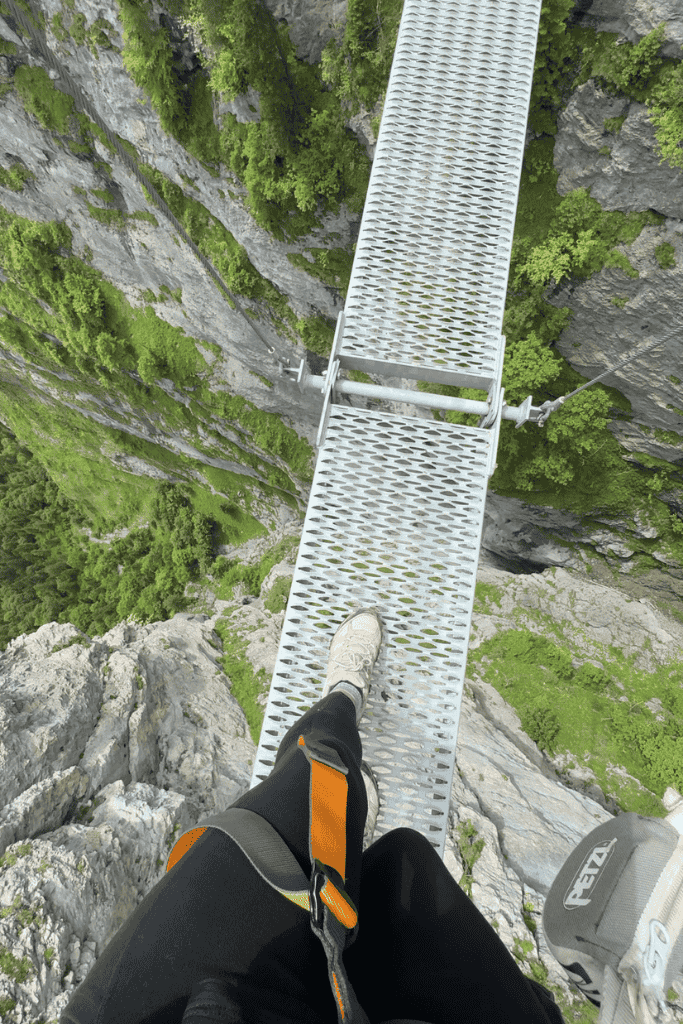
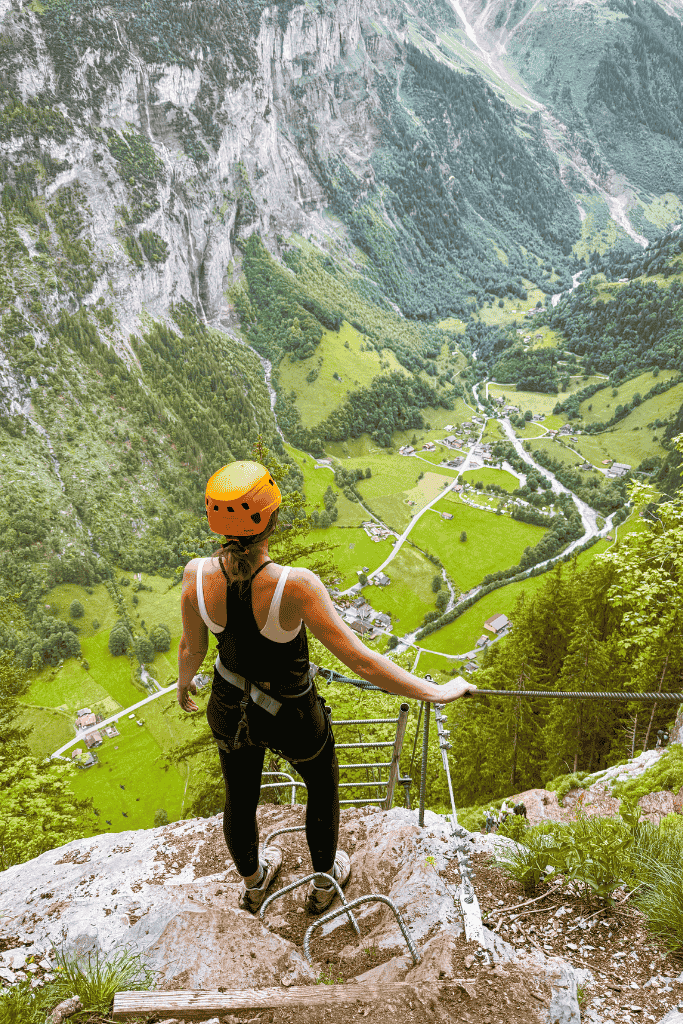
Hike the Mürren Via Ferrata
All via ferratas in Switzerland are free to access.
You just need your own harness and gear, which you can rent at Intersport in Mürren for a very affordable price. When we were there, it cost $35 per person.
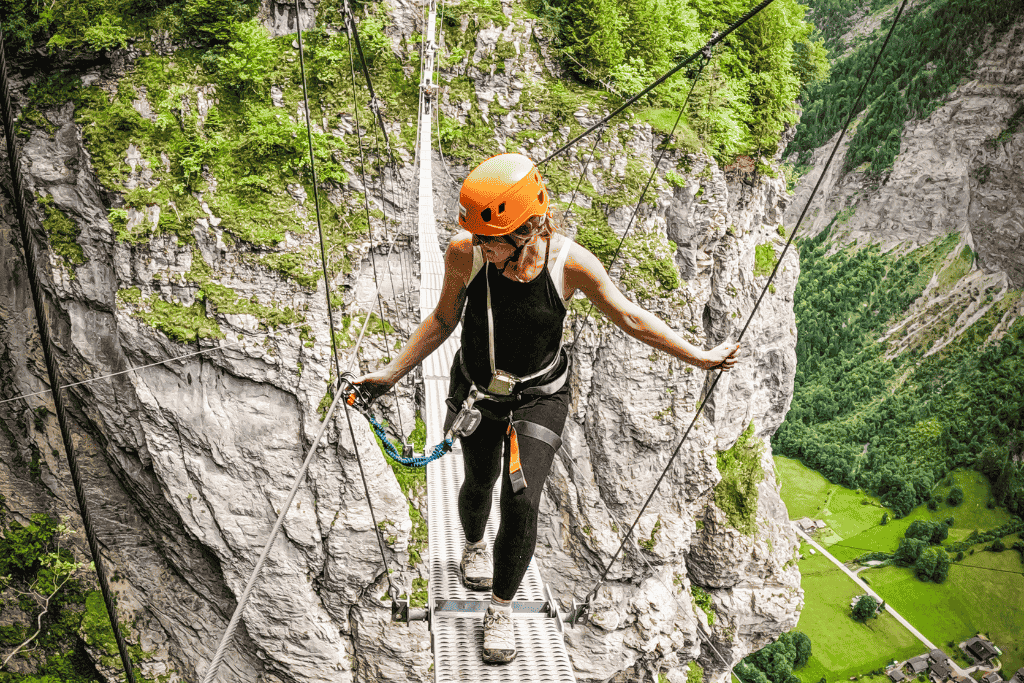
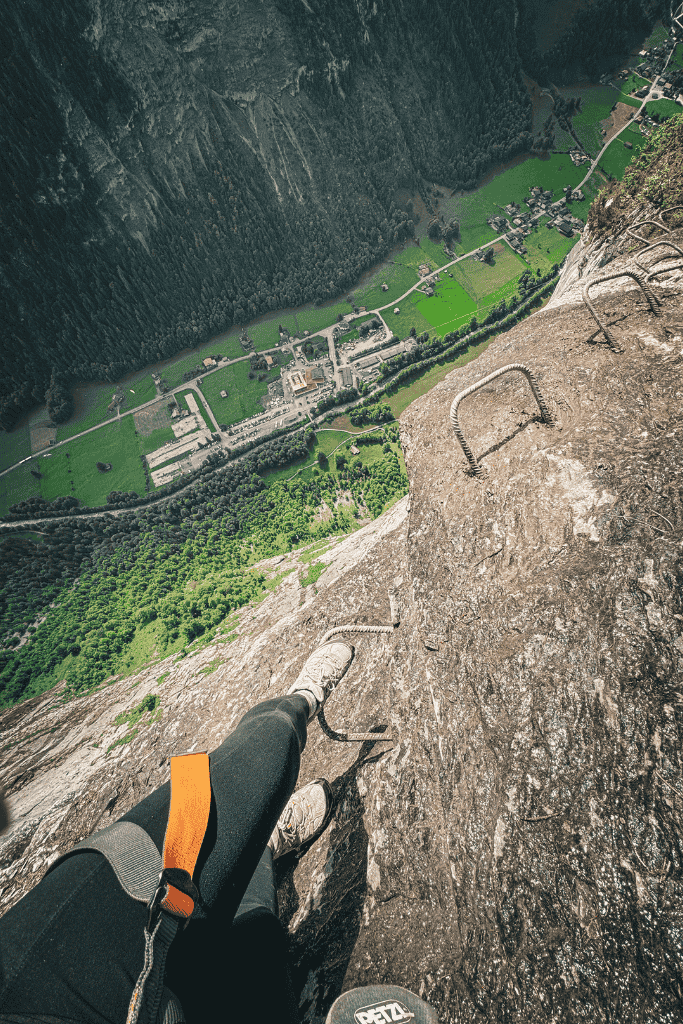
The Mürren Via Ferrata was hands down one of our favorite experiences in the entire country. Clipping into cables along cliffs, crossing suspension bridges, and hiking above the valley floor was pure adrenaline. And we did it without a guide.
You absolutely do not need to drop hundreds of dollars on adventure activities to get a rush in Switzerland.
Hike and Have a Picnic with Epic Views at Männlichen
Männlichen offers some of the best panoramic views in the Jungfrau region, in my opinion.
With the right train or regional pass, the transport up should already be included (ours was). Once you’re there, the hiking trails and views are totally free.
Bring lunch, sit with those massive mountain views in front of you, and just soak it in.
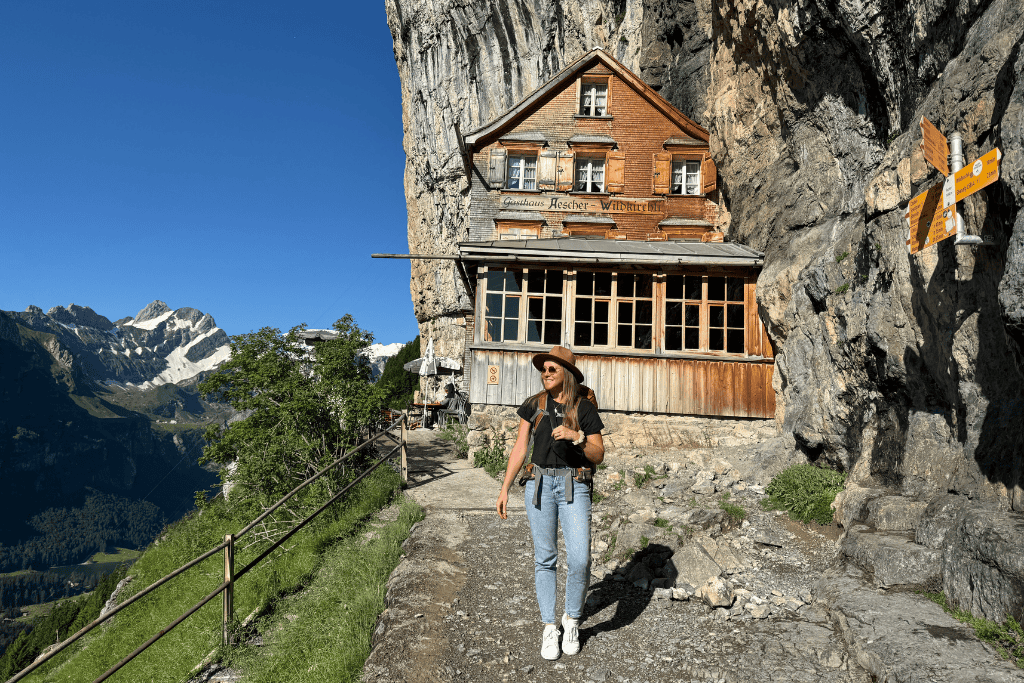
Visit Aescher Guesthouse and Hike to Schäfler Ridge at Sunrise
Aescher Guesthouse looks like it’s glued to the side of a cliff, and it’s even cooler in person.
The gondola up (from Ebenalp) is very affordable with the Half Fare Card, and the hike itself is completely free.
We stayed overnight at the guesthouse, which was one of our cheapest accommodations.
Then hiked to Schäfler Ridge for sunrise. It was peaceful and absolutely spectacular. Definitely one of our favorite hikes in all of Switzerland.
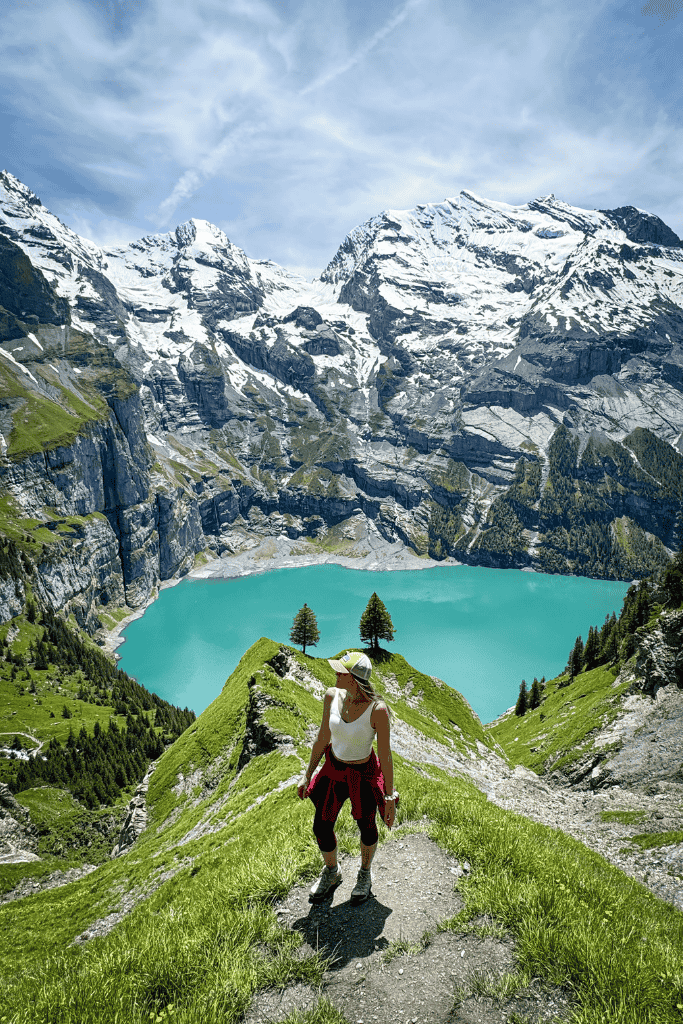
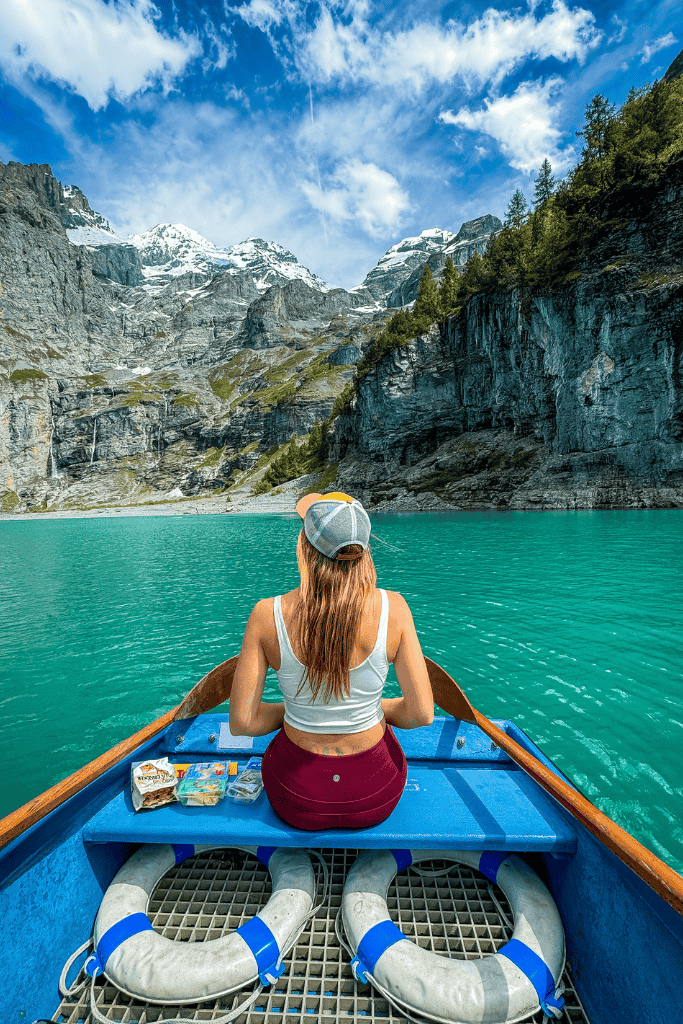
Visit Oeschinensee Lake
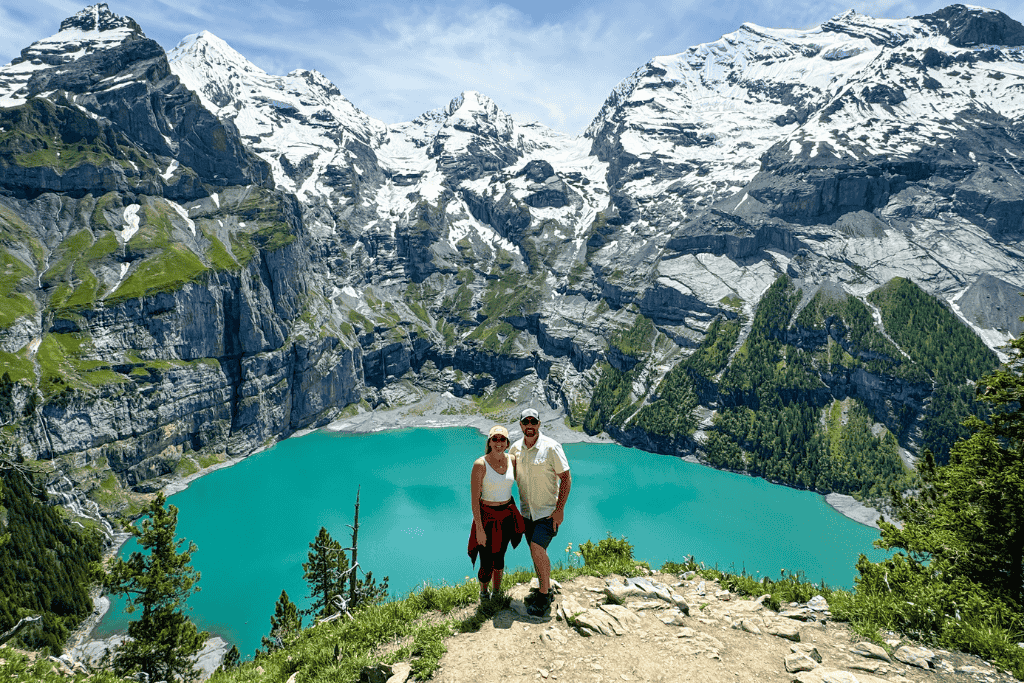
Oeschinensee is, without question, one of the most beautiful lakes I have ever seen in my life.
The water is the brightest turquoise blue. Massive cliffs surround it. Several waterfalls spill down from above. It doesn’t even look real.
You can hike around the lake completely free, and if you have the Bernese Oberland Pass, the gondola ride up is included.
This is one place you absolutely cannot skip!
Visit the Charming Village of Gimmelwald
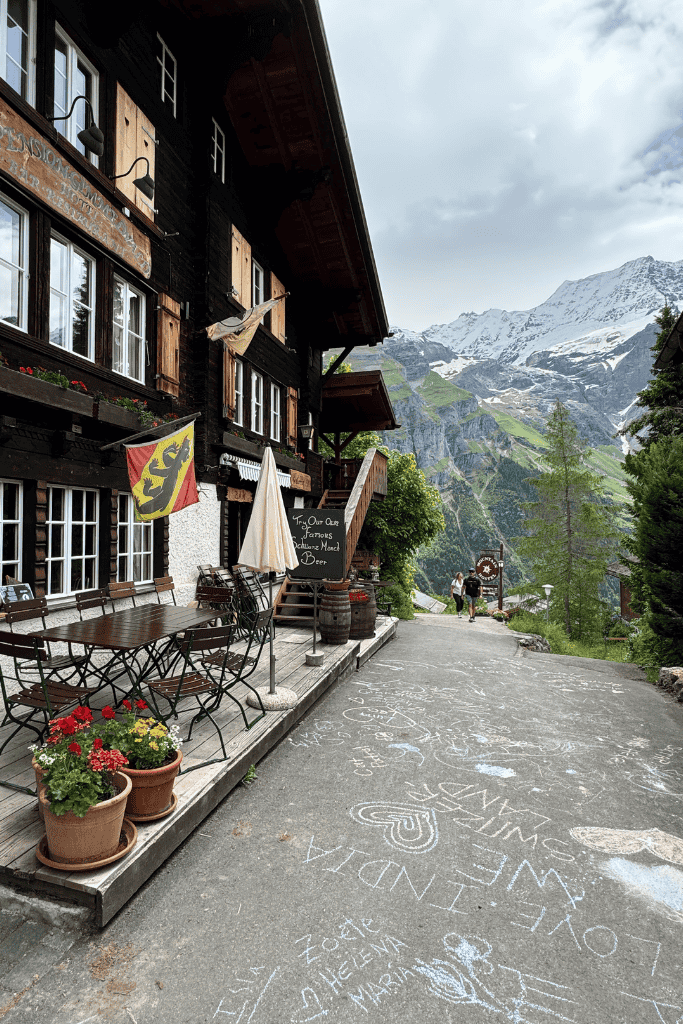
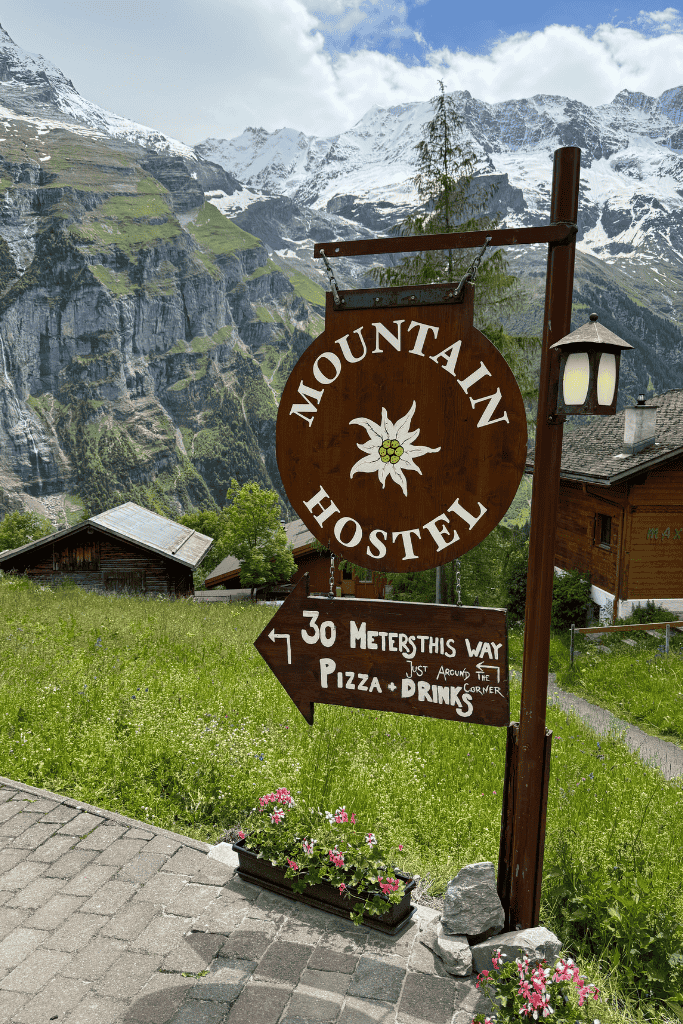
Gimmelwald might be the cutest mountain village we visited.
You can easily add it to the end of your Mürren Via Ferrata hike since that’s where the trail ends.
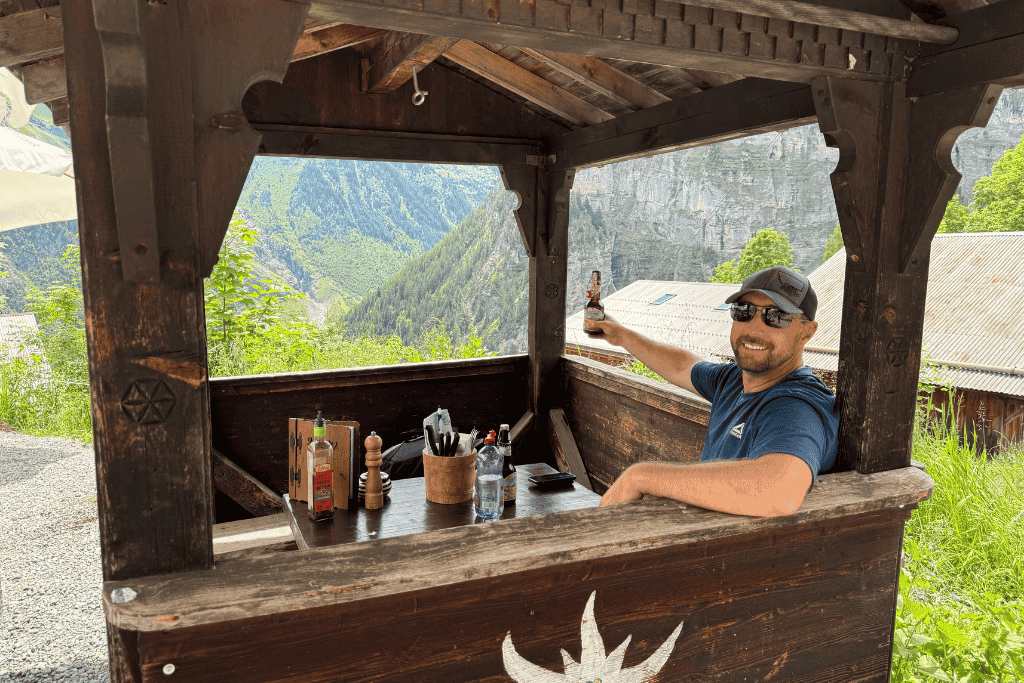
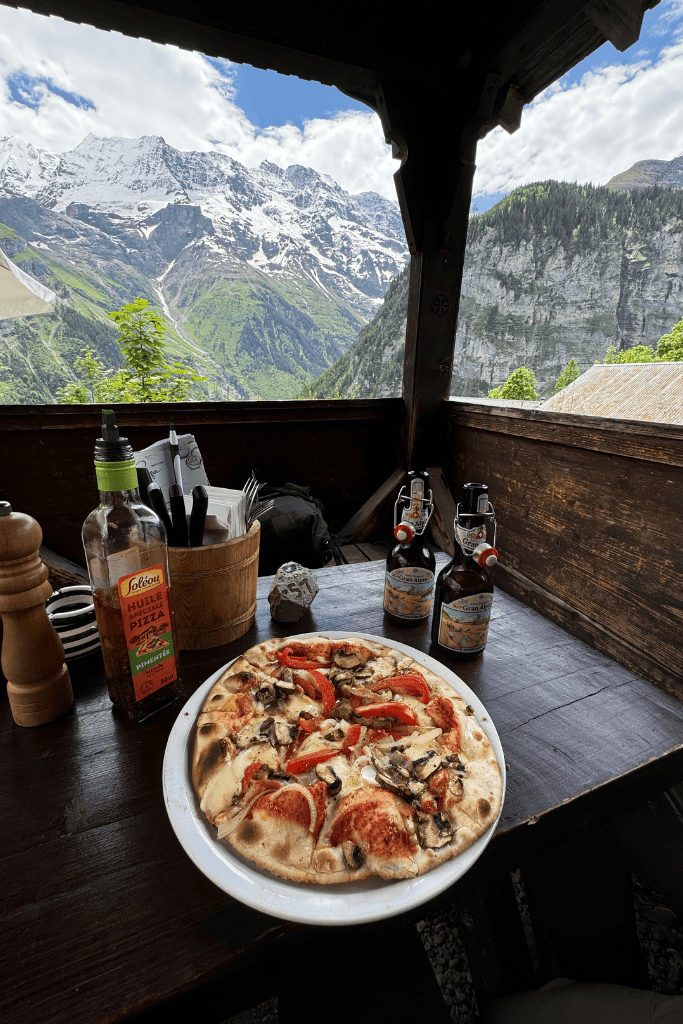
It’s peaceful, covered in local farms, and surrounded by views that don’t even look real. We grabbed a cheap beer, shared a pizza at the hostel restaurant, and just sat in a gazebo soaking it all in. One of my favorite memories.
If you don’t want to hike, the Bernese Oberland Pass covers all transportation to the village.
Hike The First Cliff Walk Above Grindelwald
The cliff walk at Grindelwald First is completely free to access you only pay for the gondola up.
At the time, when we went, the Bernese Oberland Pass covered our gondola ride, but now it doesn’t. So you might want to consider the Jungfrau Travel Pass, which includes the gondola up to Grindelwald First. Or get it half off with the Half Fare Card.
The cliff walk and viewing platforms are such a cool experience, and the mountain views are unreal.
Stroll Along The Rhine River Walk in Basel and Visit The Dreiländereck
I visited Basel in winter on a separate trip for the Christmas markets, but I had to include it in case you find yourself visiting this cool town. It’s a great entry point by train from France.
The Rhine River walk is a fantastic free activity year-round.
In summer, locals swim in the river, and boats give cruises.
I walked all the way to the Dreiländereck, which is a monument marking the meeting point of Switzerland, France, and Germany. You can basically be in three countries at once.
Boat Ride on Lake Brienz to the Giessbach Falls
A boat ride across Lake Brienz is included with the Bernese Oberland Pass, so this experience costs nothing extra.
Take the old steamboat to Giessbach Falls and hike the easy trail up to the waterfall.
The lake itself is stunning, and the falls are such a cool stop. Definitely one of the top free (or nearly free) activities near Interlaken.
More Tips For Visiting Switzerland on a Budget
Alright, before we wrap this up, here are a few more simple tips that will quietly save you money throughout your trip.
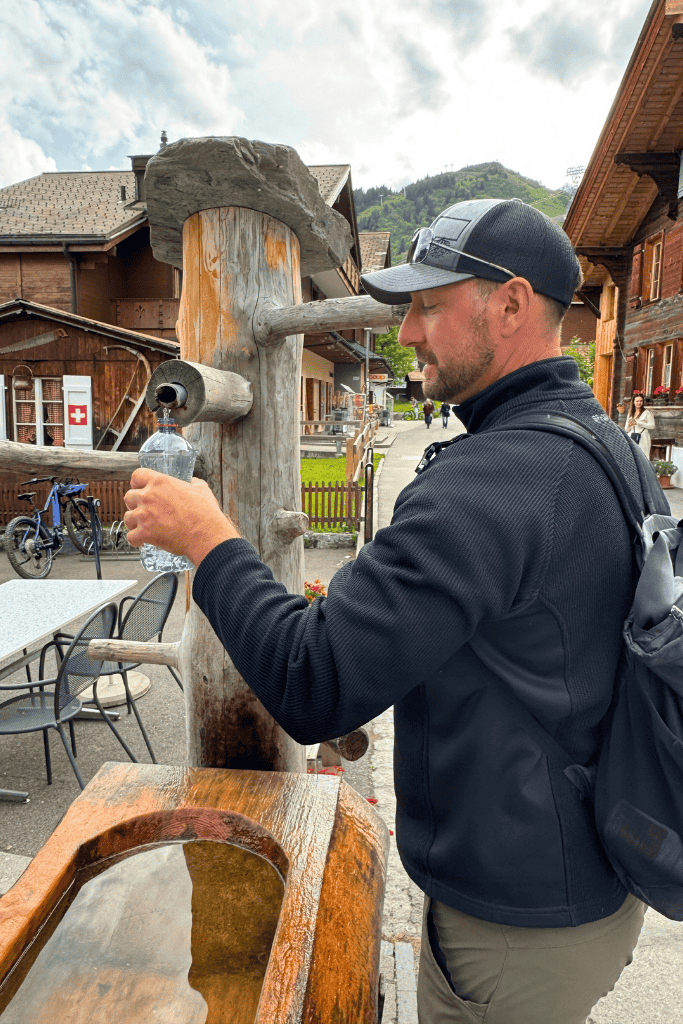
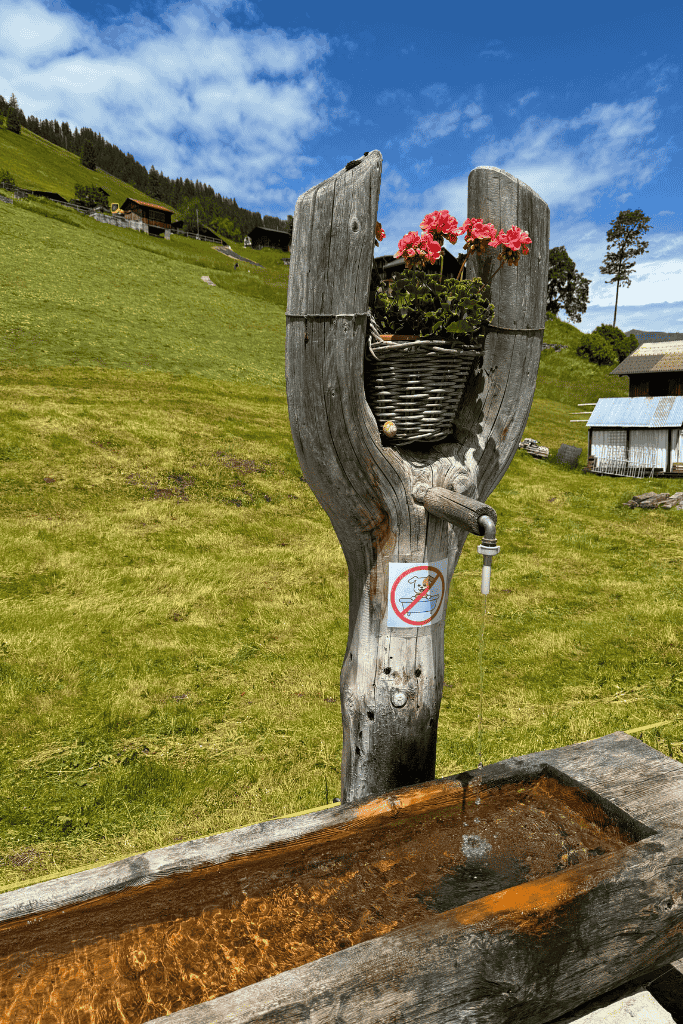
Bring a Reusable Water Bottle and Drink the Water
The water in Switzerland is some of the cleanest, freshest water you’ll ever taste. And there are public fountains everywhere. In cities, tiny villages, along hiking trails, and even high up in the mountains.
Bring a reusable water bottle and refill it constantly.
Do not waste money buying bottled water for $5 a pop. It honestly feels ridiculous when you realize you can get better water for free.
Tipping is not as Big in Switzerland
Tipping in Switzerland is appreciated, but it’s not expected or demanded the way it is in the U.S.
Service charges are typically included in the bill.
If you had great service and want to round up or leave a small tip, go for it. But you do not need to tip 20%. That alone will save you a noticeable amount over the course of your trip.
Exchange Money Only Once
When you do take out cash, think big. Try to withdraw what you’ll need for your entire trip in one transaction.
Every time you pull out money, you’ll pay more ATM fees and conversion charges. Minimizing withdrawals helps reduce those extra costs that quietly eat into your budget.
You Don’t Need a Guide
Switzerland is probably one of the easiest countries to navigate on your own. The public transportation system is so easy to use, the trails are well-marked, and everything is so organized.
You do not need to hire a private guide to explore here. With a little research and planning ahead of time, you can confidently do it on your own and save a significant amount of money.
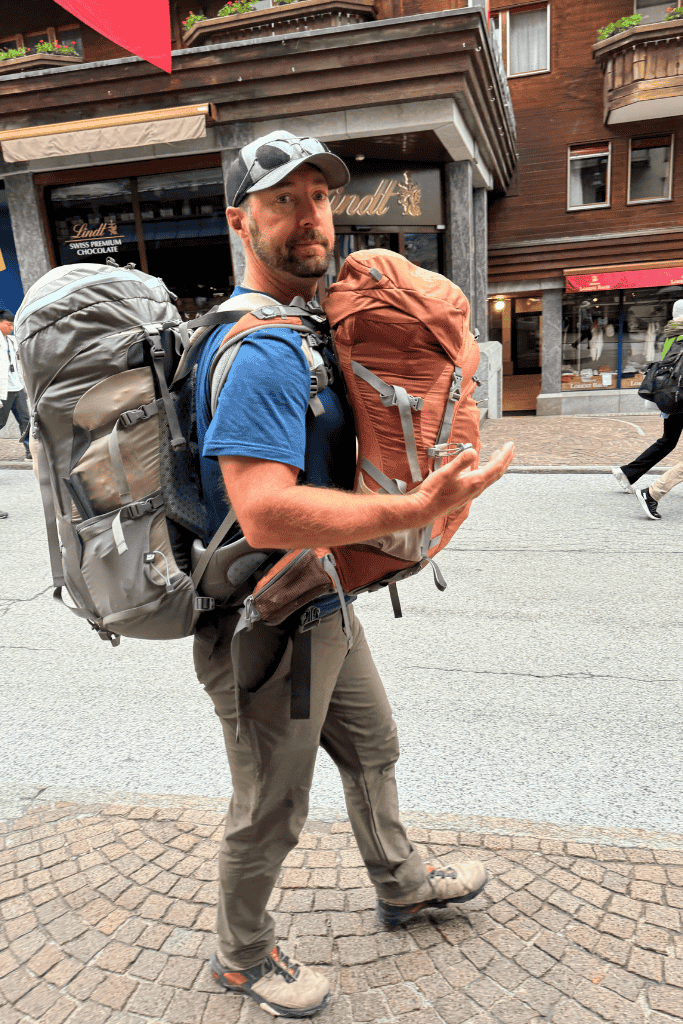
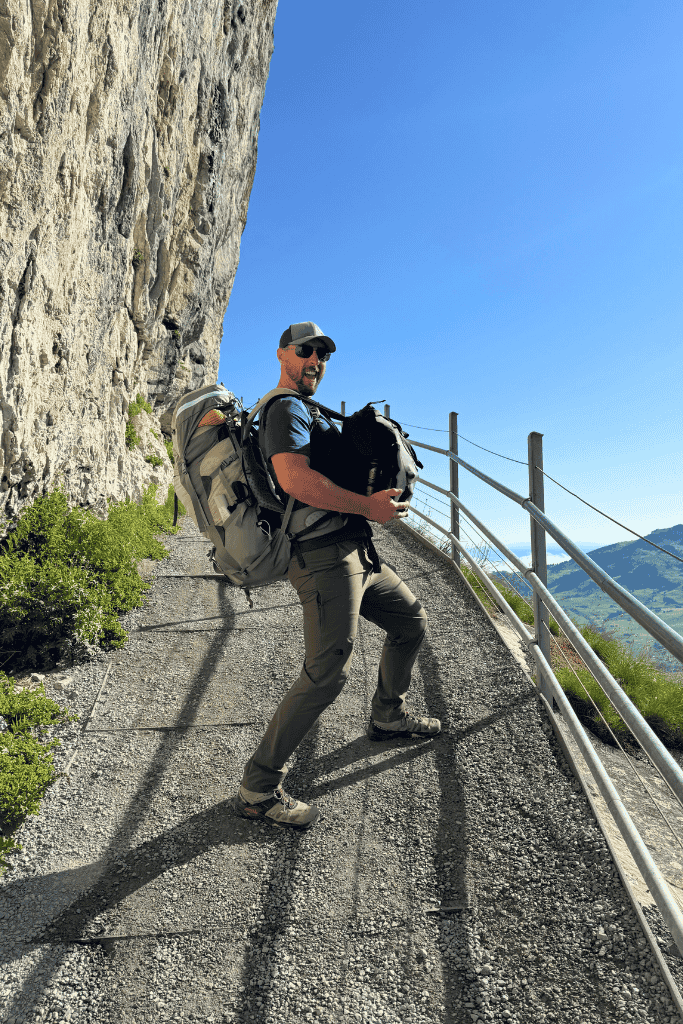
Use Your Legs!
If you really want to stretch your budget, walk more. Hike more. Choose the scenic trail over the gondola.
So many mountain viewpoints that people pay to access can also be reached by hiking.
Not only will you save money on lift tickets, but you’ll usually get better views and a more rewarding experience along the way.
Ask Accommodations for a Guest Card
This one is often overlooked.
Many towns and accommodations in Switzerland offer a free guest card when you stay overnight. These cards typically include free local buses, some trains, and even free or discounted gondola rides, boat rides, and activities within that area.
Before buying transportation passes, message your accommodation and ask what’s included. Or read the fine print carefully when booking.
That guest card might reduce how many additional passes you actually need, which means more money saved.
FAQ’s: Visiting Switzerland on a Budget
I get these questions all the time whenever I talk about Switzerland, especially when I mention we did it for free. So let’s clear up some of the biggest ones and set realistic expectations for planning your own trip.
What is the cheapest month to go to Switzerland?
November is usually the cheapest month to visit Switzerland.
It’s right before ski season starts, so there are fewer tourists and lower demand.
The downside is that some mountain lifts, restaurants, and hotels close during that time, especially in smaller mountain villages. So while you’ll save money, you might not have full access to everything you were hoping to experience.
If you still want better prices but more things open, September and October are better months. You’ll usually find lower prices than peak summer, and most services are still running.
We went in June, and honestly, I thought it was a great month to go. The weather was beautiful, the hiking trails were pretty much all open, the lifts were operating, and it didn’t feel overwhelmingly crowded.
What is a good budget for Switzerland?
If you’re paying out of pocket and not using points, a realistic daily budget is around $225–$350 per person per day for a mid-range experience. That includes accommodations, transportation, food, and some activities.
How many days in Switzerland is enough?
I’d say one week is the minimum. But if you can, 10 days is the sweet spot.
We spent 10 days in Switzerland, and it felt perfect for a first trip. We had enough time to explore multiple regions without feeling rushed.
Switzerland isn’t huge, but getting between mountain areas takes time. Even with efficient trains, you’ll spend a few hours here and there just moving around. If you only go for a few days, you’ll feel like you’re constantly in transit.
With 7–10 days, you can see the highlights and still have time to actually enjoy them. And in Switzerland, that slower pace makes all the difference.
Which city is the cheapest to stay in Switzerland?
For the Jungfrau region specifically, I highly recommend Wilderswil.
It’s located between Interlaken and Lauterbrunnen and is such an overlooked little gem. It’s adorable, peaceful, and perfectly positioned for exploring the region.
There aren’t a ton of accommodations there, but if you book early, prices are noticeably more affordable.
We based ourselves here for a big portion of our trip and saved significantly on hotel costs.
What is the cheapest city to fly into in Switzerland?
Zurich typically has the most competitive and affordable international flights.
Geneva can also have good deals, but it’s not always on the most common Switzerland itineraries, so factor in extra train time and cost if you’re heading to the Jungfrau region.
Pro Tip: Another strategy (which is what we did) is to find the cheapest flight from the U.S. to anywhere in Europe first. We flew into London for dirt cheap and then booked a short budget flight from London to Zurich. It required a little extra planning, but it saved us a significant amount of money (and points).
That’s a Wrap
If there’s one thing I hope you take away from this, it’s that Switzerland on a Budget is possible.
It takes planning. It takes a little patience. But it can be done.
The payoff is standing in front of turquoise lakes and snow-capped peaks without worrying about your bank account when you get home.
If you’re ready to start mapping out your own trip, grab my free printable Switzerland Itinerary. It walks you through everything step by step so you can plan smart from the beginning.